Common Driving Test Faults & How to Avoid Them

The most common reasons learner drivers fail their test, based on official DVSA data, and practical tips to avoid each one.

Understanding driving test faults

Minor (driving) faults: You can get up to 15 and still pass. These are mistakes that are not dangerous but show a lapse in skill.

Serious faults: One serious fault means you fail. These are mistakes that could potentially be dangerous.

Dangerous faults: One dangerous fault means you fail. The examiner or another road user had to take action to avoid danger.
Top 10 Driving Test Faults

#1

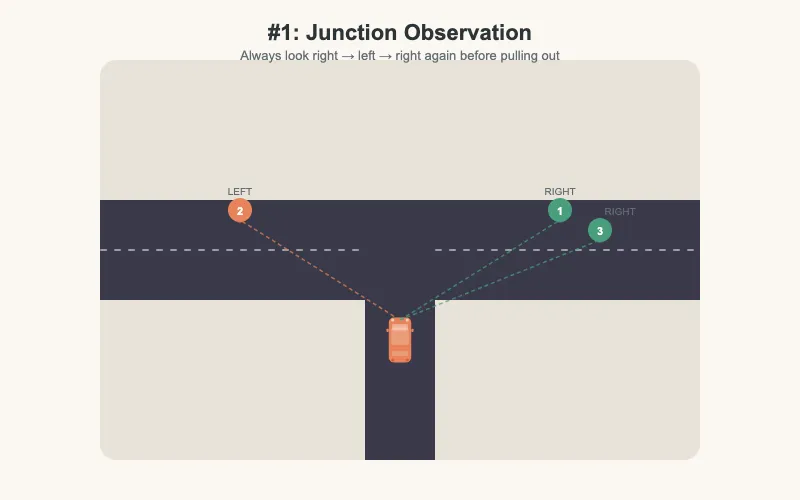
Junctions — observation Often serious

Junctions — observation diagram

Not looking properly at junctions before pulling out. This is consistently the #1 reason for failing.

How to avoid it: At every junction, look right-left-right again before moving. Check your blind spot if turning. Never assume — always look.
#2

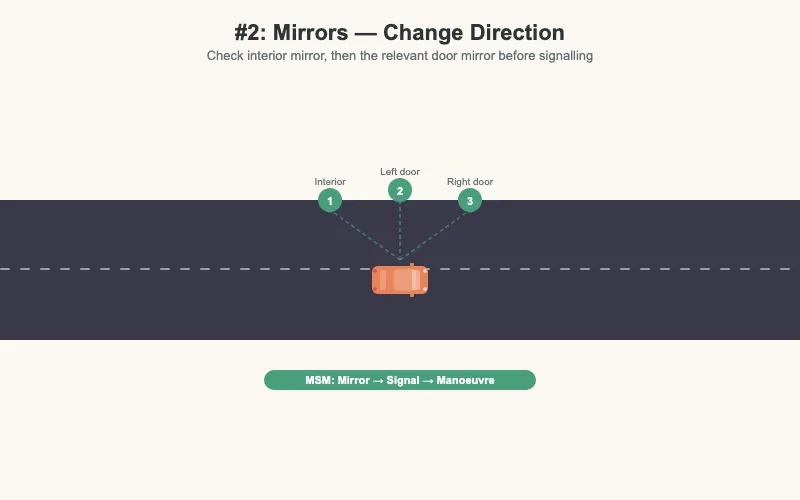
Mirrors — change direction Often serious

Mirrors — change direction diagram

Failing to check mirrors before changing direction (turning, lane changing, overtaking).

How to avoid it: MSM routine: Mirror, Signal, Manoeuvre. Check your interior mirror, then the relevant door mirror BEFORE signalling.
#3

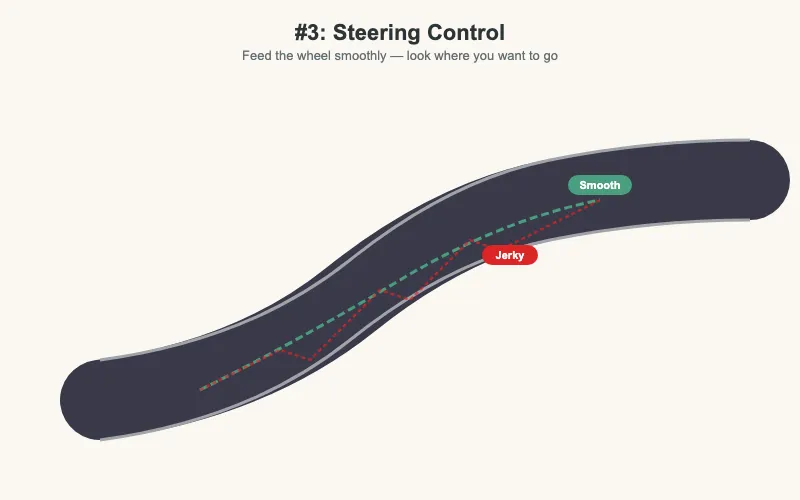
Control — steering Minor or serious

Control — steering diagram

Steering too late, too early, or crossing hands incorrectly when turning.

How to avoid it: Plan ahead — look where you want to go. Feed the wheel smoothly hand-over-hand. Don't let the wheel spin back after turning.
#4

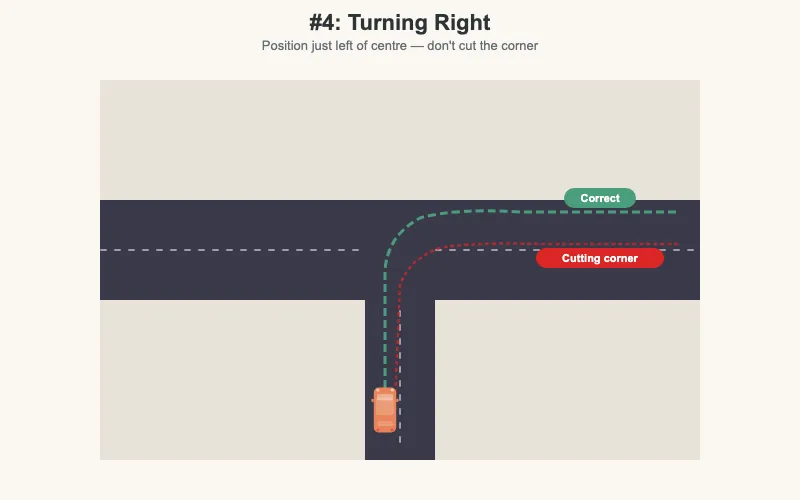
Junctions — turning right Often serious

Junctions — turning right diagram

Cutting corners when turning right, or positioning incorrectly in the junction.

How to avoid it: Position just left of centre of the road before turning. Wait in the junction until it's safe — don't rush.
#5

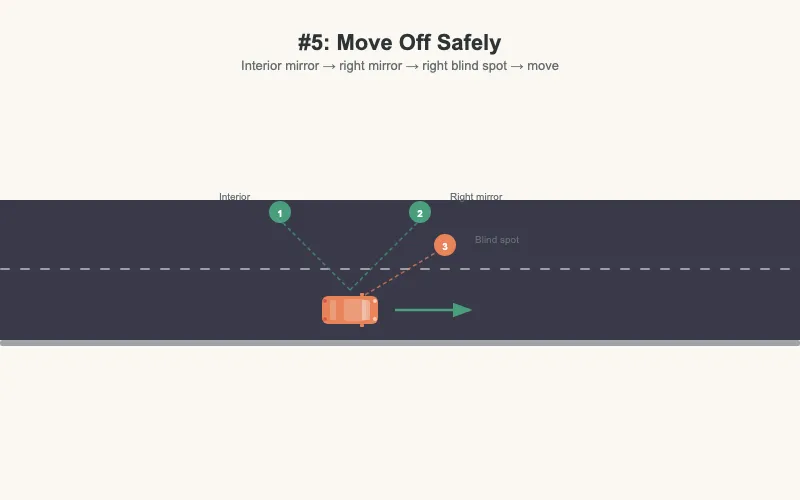
Move off — safely Often serious

Move off — safely diagram

Not checking mirrors and blind spot before moving off, or moving off into traffic unsafely.

How to avoid it: Every time you move off: check interior mirror, right mirror, right blind spot. Only move when it's safe.
#6

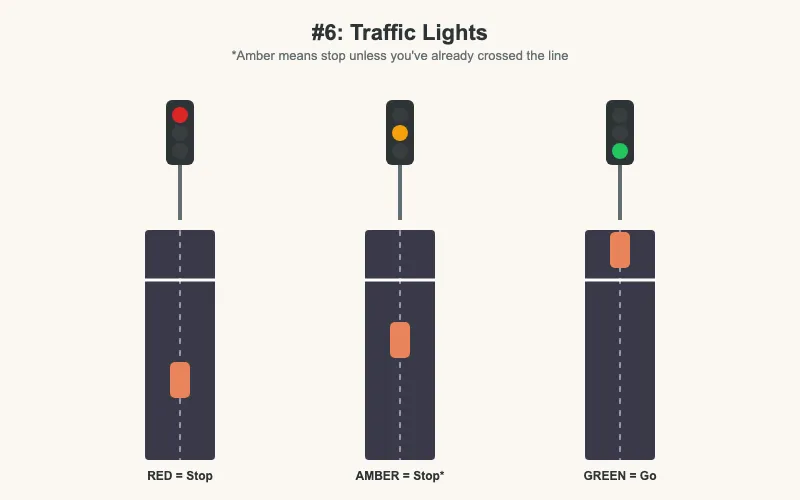
Response to traffic lights Often serious

Response to traffic lights diagram

Going through amber lights, not noticing green filter arrows, or hesitating too long at green.

How to avoid it: Approach lights prepared to stop. Amber means stop unless you've already crossed the line or stopping would be dangerous.
#7

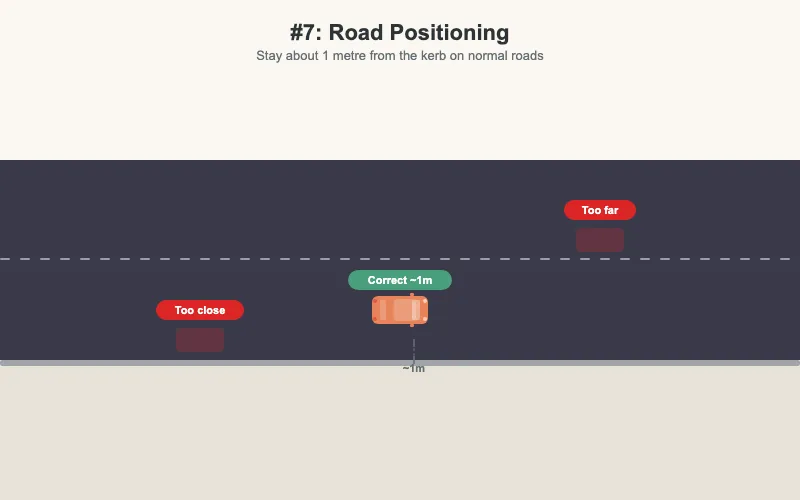
Positioning — normal driving Minor or serious

Positioning — normal driving diagram

Driving too close to the kerb, too far from the kerb, or not keeping a steady line.

How to avoid it: Stay about 1 metre from the kerb on normal roads. Follow the road markings and look well ahead for a smooth line.
#8

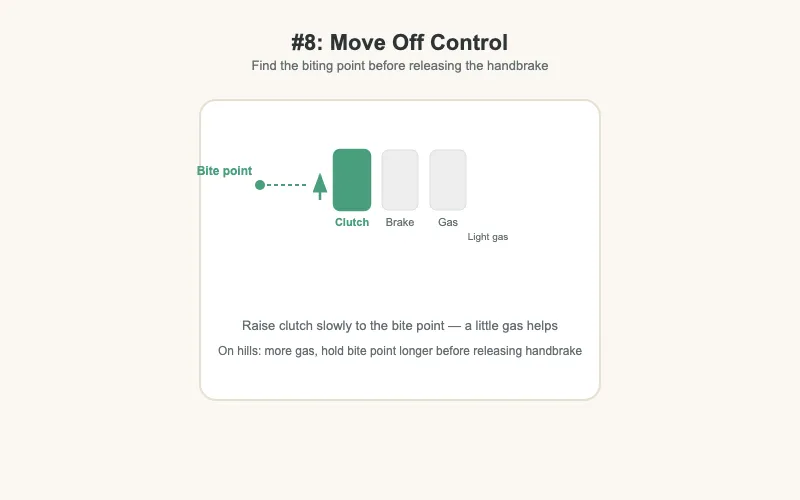
Move off — control Minor or serious

Move off — control diagram

Stalling, rolling back on hills, or jerky clutch control when moving off.

How to avoid it: Find the biting point before releasing the handbrake. On hills, use slightly more gas and hold the biting point longer.
#9

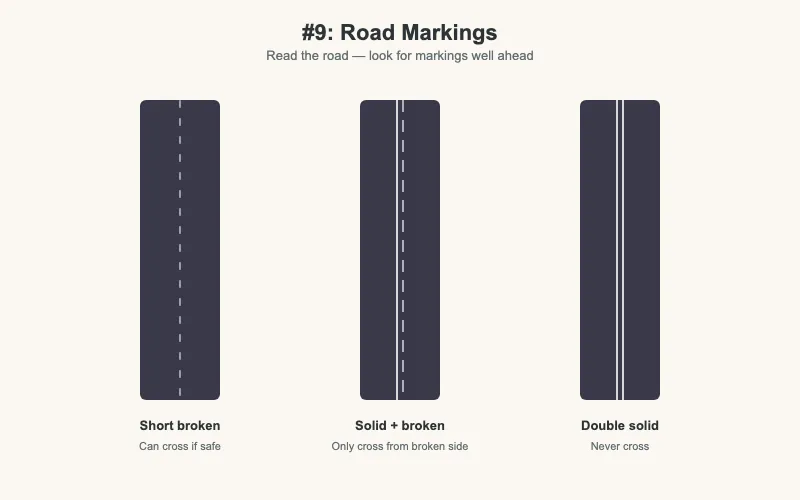
Response to signs — road markings Often serious

Response to signs — road markings diagram

Not following road markings, driving in wrong lane, crossing solid white lines.

How to avoid it: Read the road — look for markings well ahead. Get in the correct lane early for turns and roundabouts.
#10

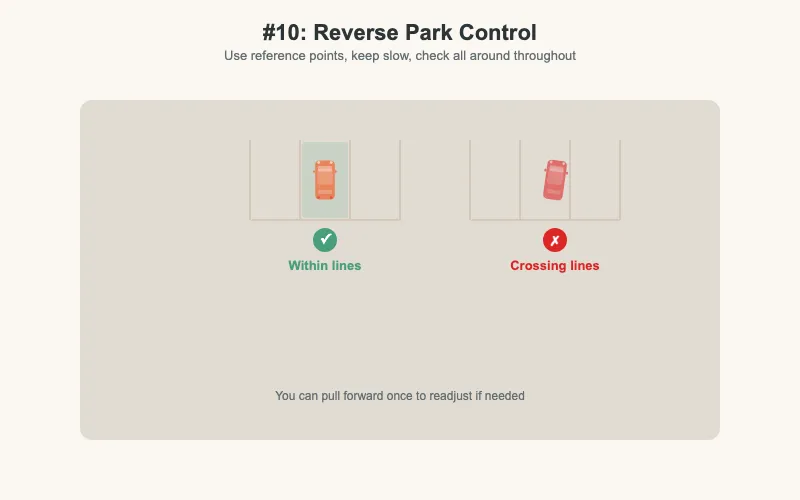
Reverse park — control Minor or serious

Reverse park — control diagram

Not parking within the bay lines, or poor control/observation during parking manoeuvres.

How to avoid it: Use your reference points, keep the car slow, and check all around (especially behind) throughout the manoeuvre.

Related Guides

Roundabout Rules

Master roundabout lane selection and signalling.

Parallel Parking Guide

Step-by-step parallel parking with reference points.

Stopping Distances Calculator

Learn the Highway Code stopping distances.

Related Tools

Theory Test Practice

200+ questions to test your knowledge.

Driving Test Cost Calculator

Work out the total cost of learning to drive.

Practice avoiding these faults

Drive on real 3D roads and build the habits that pass the test.

Start Practising Free