What MSM means, step by step
- Mirrors. Use them in good time before you signal or change direction or speed, so you know what is behind and to each side of you (rule 161).
- Signal. Give clear signals in plenty of time, having checked it is not misleading to signal at that time (rule 103). Signalling does not give you priority.
- Manoeuvre. Only then change your speed or your position on the road.
MSM stands for Mirrors - Signal - Manoeuvre, and the order is the point: the mirror check decides whether, when and for whom you signal.
Mirrors, then signal, then manoeuvre
Rule 161 of The Highway Code says you should use your mirrors frequently so that you always know what is behind and to each side of you, and use them in good time before you signal or change direction or speed. It ends: "Remember: Mirrors - Signal - Manoeuvre".
Why the mirror check comes before the signal
The mirrors tell you who your signal is for, and whether it is safe to change speed or position at all. A signal given without looking can mislead or surprise someone you have not seen, such as a cyclist coming up on your left before a left turn.
Where The Highway Code asks for it
| When | What the Code says | Rule |
|---|---|---|
| Moving off | Use all mirrors, look round to check the blind spots, signal if necessary before moving out | 159 |
| Changing lane | First use your mirrors and if necessary take a quick sideways glance | 133 |
| Overtaking | Use your mirrors, signal when it is safe to do so, take a quick sideways glance if necessary into the blind spot area | 163 |
| Turning right | Use your mirrors to know the position and movement of traffic behind you, then give a right-turn signal | 179 |
| Turning left | Use your mirrors and give a left-turn signal well before you turn left | 182 |
| Roundabouts | Use Mirrors - Signal - Manoeuvre at all stages | 184 |
Lessons on each: moving off safely, do you have to signal when moving off?, mirrors before braking and turning right at a junction.
Blind spots
Mirrors do not cover all areas, and there will be blind spots: you will need to look round and check (rule 161). Before a left turn, that can mean a look over your left shoulder for cyclists.
What examiners mark
Not using mirrors correctly when changing direction is the No. 2 reason learners fail (DVSA, April 2024 to March 2025). You must always make full and effective use of all the mirrors, check them carefully before signalling, changing direction or changing speed, and use the mirror - signal - manoeuvre routine effectively. DVSA's examples include changing lanes on a roundabout with a vehicle directly alongside, and leaving a roundabout without checking mirrors, cutting across a following vehicle.
The junction in the video
The video was filmed at the traffic lights where Waterfall Road and Robinson Road meet High Street Colliers Wood (A24) in Colliers Wood, in the London Borough of Merton.
Practise it in Colliers Wood, London
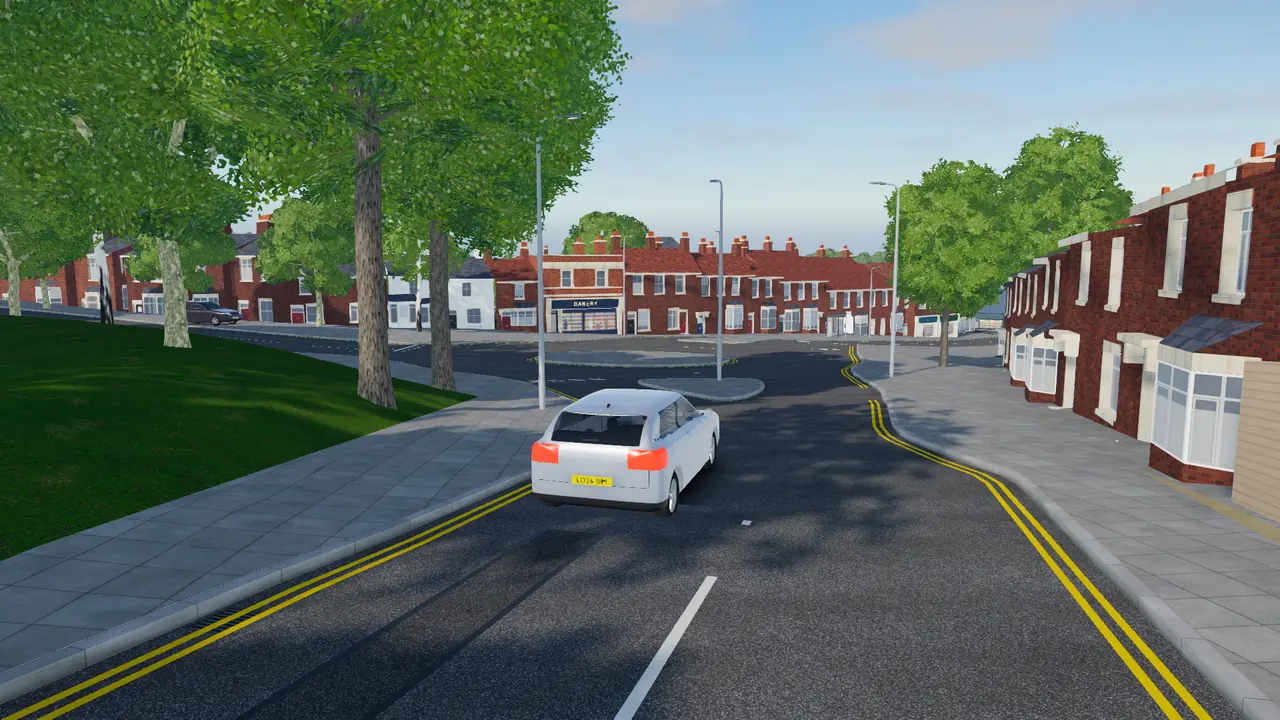
The video was filmed in DriveSim's 3D rebuild of Colliers Wood, London, built from open map data: the real lanes, road markings and buildings. Drive the same streets free and try it for yourself.