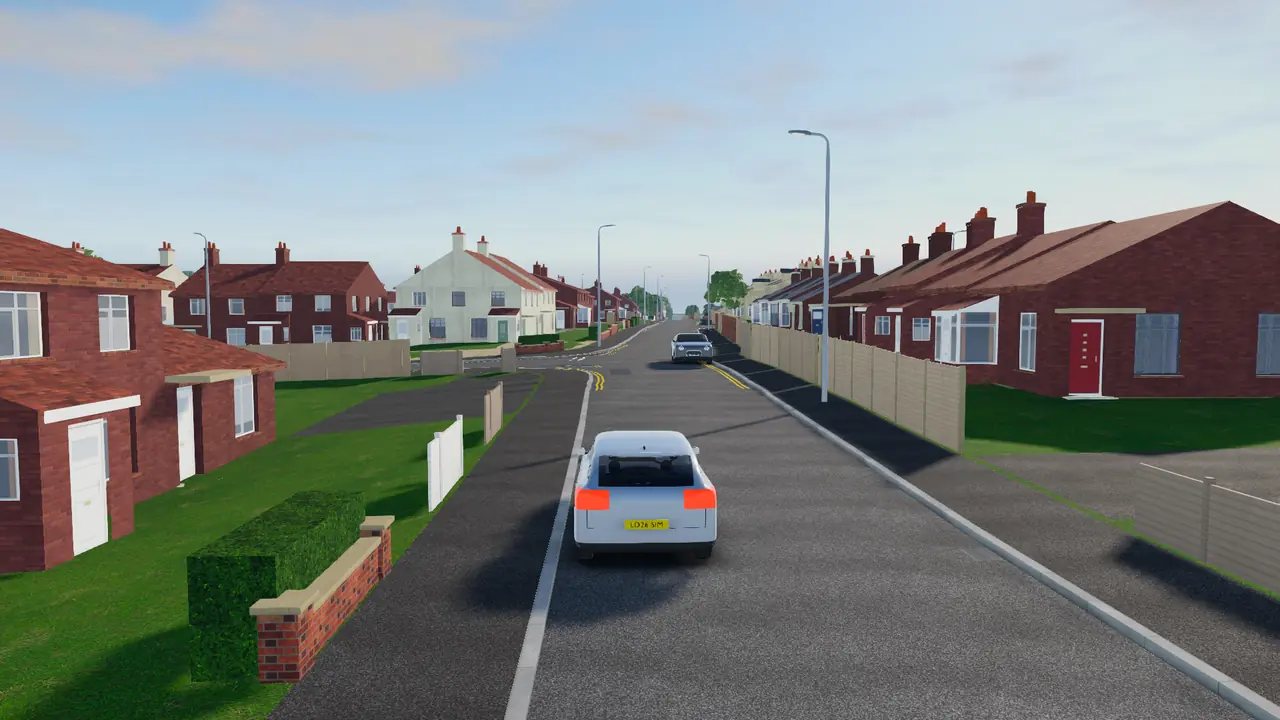
What The Highway Code says
Rule 126: leave enough space between you and the vehicle in front so you can pull up safely if it suddenly slows down or stops. Allow at least a two-second gap on roads carrying faster-moving traffic and in tunnels where visibility is reduced. The gap should be at least doubled on wet roads and increased still further on icy roads.
How to count two seconds
Pick a fixed point ahead, such as a sign or a bridge. When the vehicle in front passes it, start counting "only a fool breaks the two-second rule". If you reach the point before you finish, you are too close.
The road in the video
The video was filmed on London Road (A24), a dual carriageway in Morden. The car ahead in the question is imagined: the video asks you to say you are following one.
Common mistakes
- Staying within two seconds of the car ahead on a fast road.
- Not doubling the gap when the road is wet.
- Counting from the wrong point instead of a fixed marker.
Practise it in Morden, Tudor Drive, London
The video was filmed in DriveSim's 3D rebuild of Morden, Tudor Drive, London, built from open map data: the real lanes, road markings and buildings. Drive the same streets free and try it for yourself.