What the rule says
Rule 103 of The Highway Code says you should always give clear signals in plenty of time, having checked it is not misleading to signal at that time. Its own example: if you want to stop after a side road, do not signal until you are passing the road. If you signal earlier, it may give the impression that you intend to turn into the road. Your brake lights will warn traffic behind you that you are slowing down.
Why timing matters
A signal is read by everyone who can see it, including anyone waiting to pull out of that side road. A left signal before the side road looks like a turn into it. Waiting until you are passing it keeps the message clear.
The road in the video
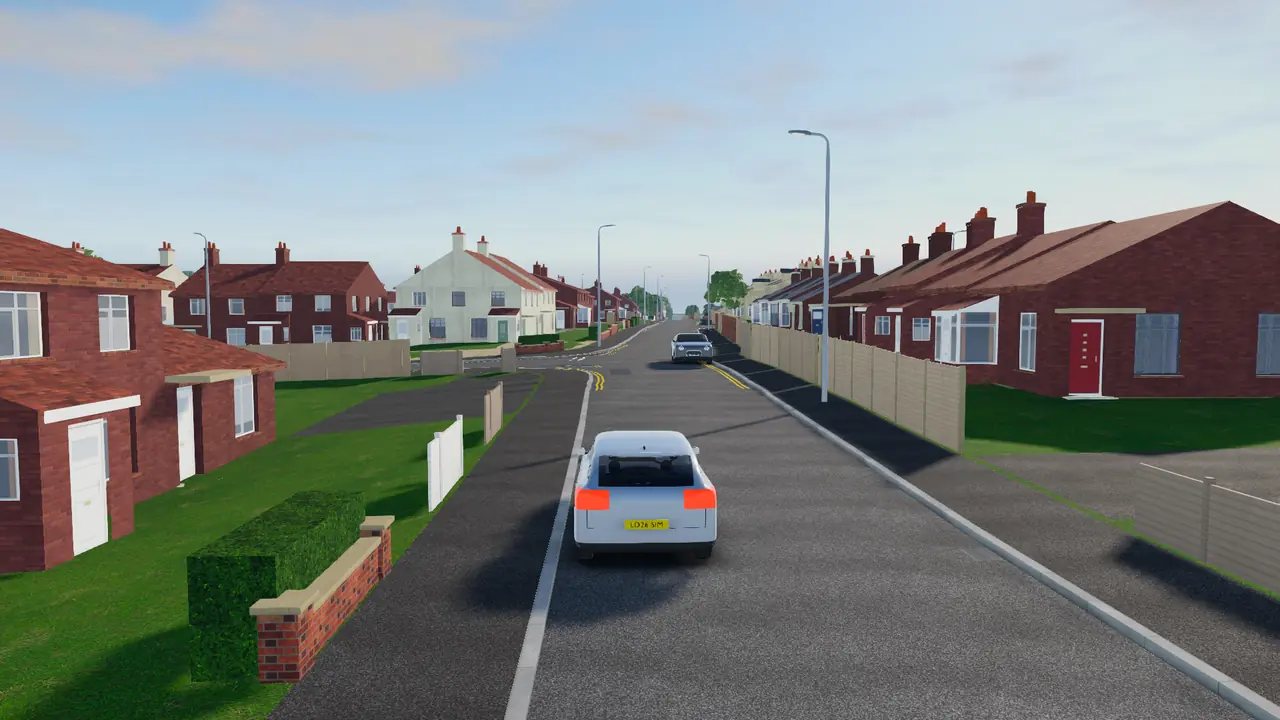
The video was filmed on Lytham Road in Preston, where Balcarres Road joins it as a side road on the left. The car drives past the side road and pulls up just after it.
Common mistakes
- Signalling as soon as you decide to stop, before the side road.
- Forgetting to cancel the signal once you have stopped.
- Relying on the signal alone, when your brake lights and road position tell people what you are doing too.
Practise it in Preston
The video was filmed in DriveSim's 3D rebuild of Preston, built from open map data: the real lanes, road markings and buildings. Drive the same streets free and try it for yourself.