The No. 1 reason learners fail
DVSA's figures for April 2024 to March 2025 put 'not making effective observations at junctions' at the top of the reasons learners fail the car driving test, ahead of not using mirrors correctly when changing direction and not moving off safely. Examiners see learners pull out without looking properly, or misjudge how fast traffic is coming. DVSA's top 10 reasons for failing.
Before the junction: mirrors, signal, position
Check your mirrors, signal in good time, and position: near the left kerb to turn left, just left of the centre line to turn right. Slow right down as you reach the line, ready to stop.
Give way lines vs stop lines
Broken white lines across your side of the road mean give way: you must give way to traffic on the main road (rule 172), but you don't have to stop if it's clear. A solid white line with a STOP sign means you must stop behind the line every time, even if the road is empty (rule 171).
Looking properly
Look right, left and right again, and keep looking as you go. Watch for cyclists, motorcyclists and pedestrians, who are easy to miss (rule 170). Examiners mark it when you look but don't act on what you see.
When you can't see: peep and creep
If parked cars, hedges or buildings block your view, creep forward slowly until you can see properly, then decide. Don't edge out into the path of traffic.
Faults examiners mark at junctions
Pulling out so another driver has to slow down or swerve is a serious fault. Waiting too long when it's clearly safe (undue hesitation) can be marked too. Take the safe gap when it comes.
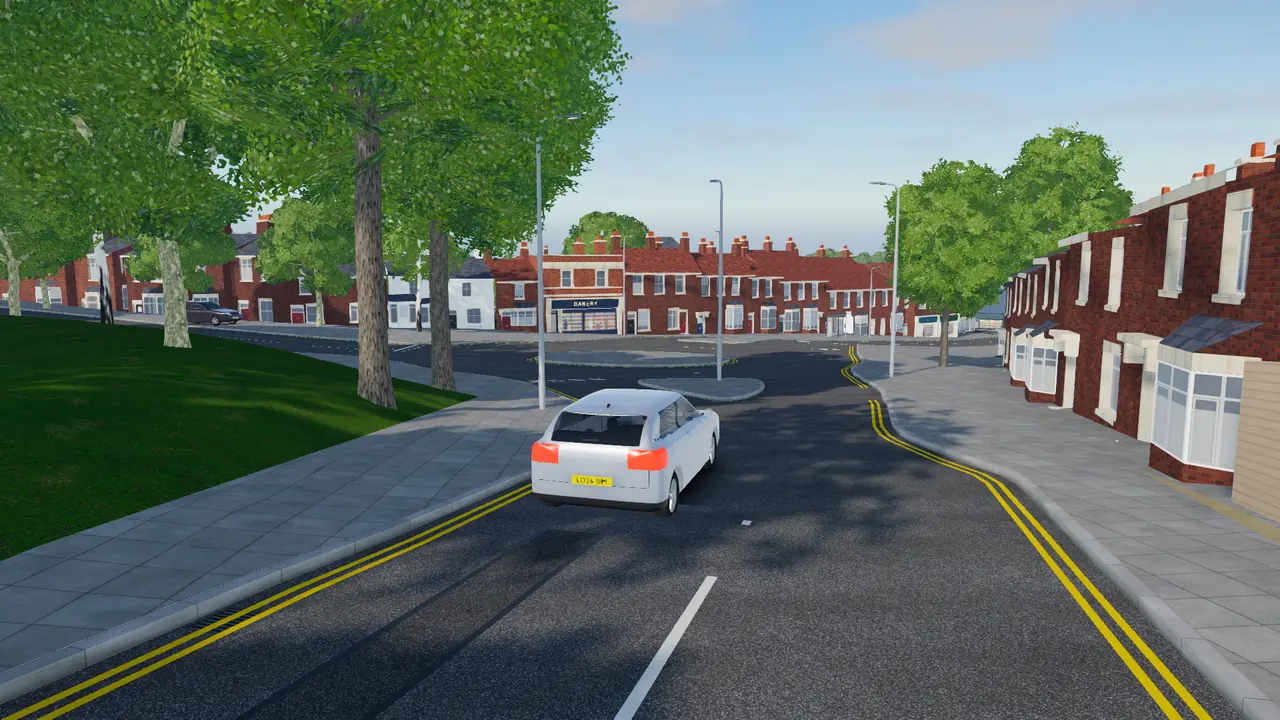
The junction in the video
The video was filmed where Fenkle Street meets Clayport Street in the centre of Alnwick, Northumberland, by St Michael's Pant.
Practise it in Alnwick, Northumberland
The video was filmed in DriveSim's 3D rebuild of Alnwick, Northumberland, built from open map data: the real lanes, road markings and buildings. Drive the same streets free and try it for yourself.