Simulator or lessons: what each one is for
They do different jobs, so the useful question isn't which is better but what each one is for.
| Driving simulator | Lessons in a car | |
|---|---|---|
| Car control: clutch, steering feel, braking | No | Yes |
| Real traffic and other people's mistakes | No | Yes |
| Feedback on your driving from a person | No | Yes |
| The road layouts round your test centre | Yes, as often as you like | Only when a lesson goes there |
| Repeating one junction ten times in a row | Yes | Rarely practical |
| Available at any hour, from home | Yes | No |
| Counts as supervised driving | No | Yes |
GOV.UK's rule is that you must be supervised when you're learning to drive a car, by a driving instructor or by someone else who meets the rules, such as family or friends. Nothing on a screen changes that.
What a driving simulator can teach you
- Roundabouts: which lane each exit wants, and where the exits are, before you meet them at speed.
- Junction layouts: where the lanes split, where the lights are, where the give way lines sit.
- Speed limits and signs: where a 30 becomes a 20, and which roads are one-way or no entry.
- Following directions: hearing "at the roundabout, take the second exit" and acting on it in good time.
- The area itself: DVSA doesn't publish the roads its examiners use, but they use the roads round the centre, and you can know those well.
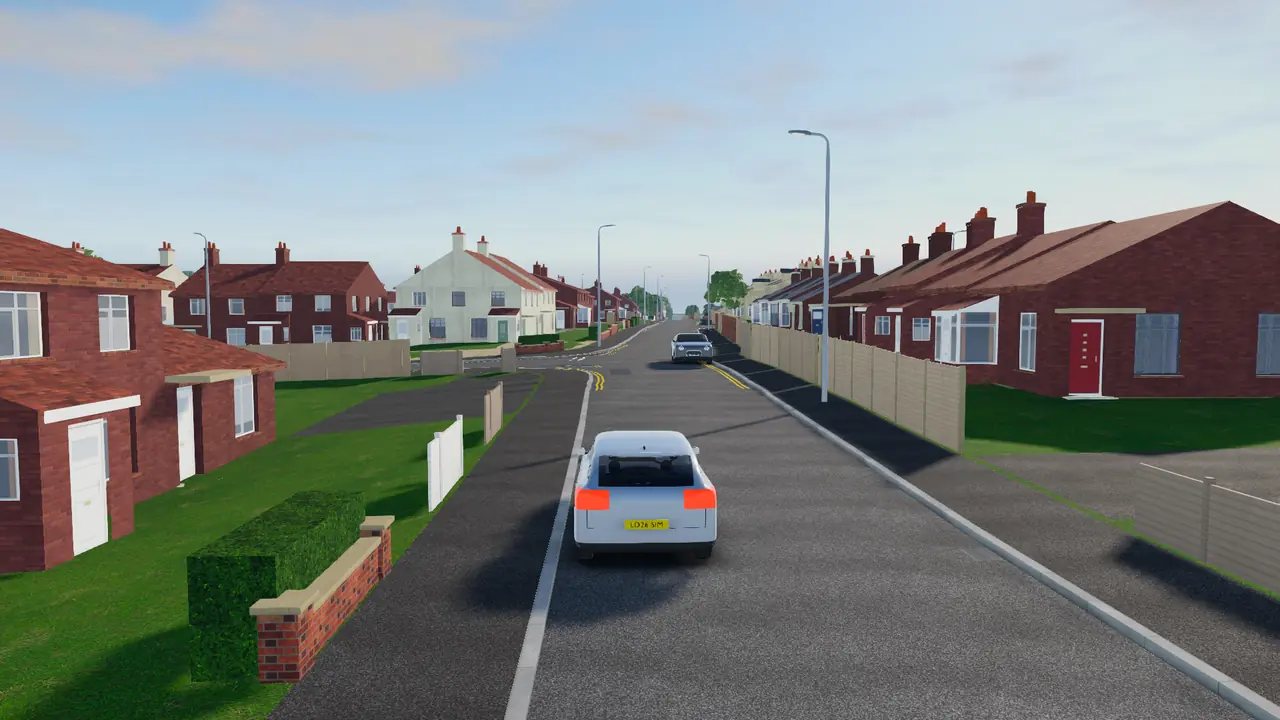
If you want to try it, you can play the driving simulator online, free: it runs in a browser on a phone or a computer, on the real roads round UK test centres in 3D. The home page explains what a driving test simulator is, and there's a mock driving test online in which an examiner gives you directions.
What only lessons in a car can teach
- Car control: the clutch's biting point, how hard to brake, how much to steer. These are learnt by feel.
- Observation as a habit: mirrors and blind spots checked every time without thinking about it.
- Other road users: judging the speed of real traffic and reacting to what people actually do.
- Manoeuvres: parallel parking, bay parking and pulling up on the right in a real car with real kerbs.
- A trained eye on you: an instructor spots the fault you don't know you have.
DVSA's own list of the most common reasons for failing is made of these: observation at junctions, mirrors, moving off safely. See driving test faults explained.
How to use the two together
- Before a lesson near your test centre, drive the area in the simulator. Find the roundabout or junction you dread and take it until the layout is familiar.
- In the lesson, tell your instructor which junctions you looked at, and spend the hour on doing them well in the car.
- After the lesson, go back to anything that caught you out and look at it again while it's fresh.
- In the week before your test, drive the roads round the centre a few more times so nothing on the day is new.
Each test centre's page shows its roads and its DVSA pass rate.
What it costs to try
In DriveSim UK your first drive is free: 2 minutes, with no sign-up and no card. After that, drives come in one-off packs with no subscription; the current prices are on the home page.